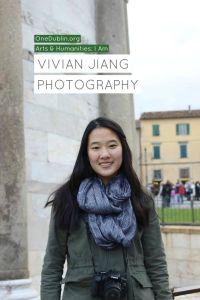
With a Canon EOS 600D camera in her hands, and an army green backpack slung over her shoulders, Vivian Jiang walks through Dublin High’s campus, looking for people, plants, or places to add to her photography portfolio. Whether it be the flashes of moving cars, the variations in a dancer’s routine, or her best friends at a birthday party, nothing intimidates this well-seasoned photographer on her goal to make art.
“It documents the world in a different way than words do,” says Jiang. As a photographer, her role is “bringing attention to what’s beautiful about our world, such as landscapes or individuals.”
Jiang first started her passion of photography when she was eight and received her first camera. Since then, she has taken this art to new places such as the San Francisco Art Institute (SFAI). There, she attended a precollege program for five weeks, learning about photography and editing, and gaining an impressive and diverse skillset as a photographer.
“I learned about the rule of thirds and to be more open with showing others my work,” says Jiang, who also discovered that risk-taking was a key element to photography while studying at the SFAI.
“Don’t be afraid to go out of your comfort zone,” she recommends. “Try different types of photography or do something you normally wouldn’t.”
Finishing College Abroad – Summer Benavidez’s Journey from Dublin to UNR to Turin, Italy
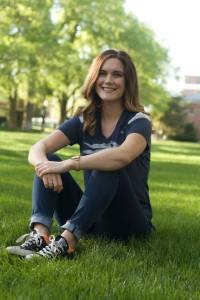 We last spoke with Dublin High School Class of 2011 graduate Summer Benavidez as she was completing her freshman year at the University of Nevada, Reno (read more…). Fast forward to the summer of 2015 and Summer spoke with us from Turin, Italy where she is completing the final requirements for a degree in economics and business management at the Università degli Studi di Torino. Summer’s story adds to the portfolio of Life in College and Life After College series of articles profiling the journeys of Dublin High grads.
OneDublin.org: What led you to major in economics, and how does economics at the college level differ from your experience back in high school taking AP Microeconomics?
Summer Benavidez: “I think it was a surprise to everyone who knew me that I decided to major in economics. AP Microeconomics was the hardest class I had taken up to that point and I actually struggled to get a C in that class! Luckily my teacher, Ms. Carhart, was always there to help me and pushed me to keep trying and it was those moments when it finally clicked that I realized I liked economics. I liked the challenge that it presented so when I started excelling at it in college I felt really accomplished. At the college level, economics definitely gets more complex and complicated, but taking AP Micro helped prepare me for those late nights and the times I felt like I would never understand the material.”
OneDublin.org: How did your college experience change as you transitioned to upper level courses?
Benavidez: “I enjoyed college much more as an upperclassman for many reasons, but mainly because my courses became more applicable. Once I started taking classes that I felt I could use towards a career, and taking them with people who had similar interests, I liked college even more. On top of that, I felt more motivated to understand the material I was learning.
“As a lowerclassman, you’re taking general ed classes that might not apply to your major so it kind of goes in one ear and out the other, but once I started applying for internships and eventually relevant jobs, I realized the importance of what I was learning. I also picked up a second major as an upperclassman. As much as I love dealing with data and putting together reports, I also love working with people and in teams, so I decided to pick up a business management major. It was the best decision I made because I’m blending my analytical nature with my love for working with people.”
 “Guard your spare moments. They are like uncut diamonds. Discard them and their value will never be known. Improve them and they will become the brightest gems in a useful life.” – Ralph Waldo Emerson
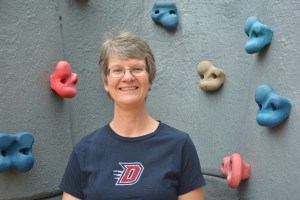
A diamond of any value, possess many facets. So, it would be logical to attach this analogy to one that has been successful in life. At the final Superintendent’s Council luncheon in June at the District Office, parent and long time community volunteer, Chris Bennett, was awarded with what will become an annual recognition – the Superintendent’s Volunteer Award. According to Dr. Stephen Hanke, this will likely become an annual recognition and it seeks to acknowledge significant contributions made over many years of service to the district and community. Subsequently, she was honored at a Board of Trustees meeting.
So, within this theme, there are many sides to Ms. Bennett. She is a mother, author, businesswoman, wife, singer, volunteer, avid world traveler and a leader of people. The objective of this profile was not to compile a list of her accolades – and there are many. Rather, it is an attempt to help others to understand her journey; how she became a parent volunteer and an opportunity to allow her to thank her peers.
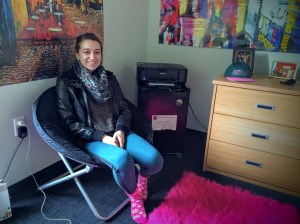 Every university student that has ever lived in a dorm has had the shared experience of living under the watch of a residence advisor. With the thousands of residence advisors around the world, comes the many, and often hilarious, misconceptions about what it means to be a residence advisor. A couple years ago, a friend posted a picture of her residence advisor’s room on Instagram and exclaimed in horror that she had moved into the room across the hall. During my past year as a residence advisor, a few of my residents seemed surprised when they realized I had a life outside my job.
From the outside, the job of a residence advisor can seem like a mystery. Is there more to the job than enforcing residence rules? Do residence advisors have normal lives like other students? During my freshman year I shared many of these questions and misconceptions, and I never would have imagined that I would apply to be a residence advisor. Not only did I apply to be one, but I will be starting my second year as a residence advisor this coming fall. And fortunately, I not only have a life, but a very fulfilling one!
At the beginning of my freshman year, I thought that being a residence advisor was primarily about enforcing residence standards. On the contrary, my role consists of so much more. As a residence advisor, my most important responsibility is to build and maintain a happy and healthy living community for my residents. To achieve this, I assume a variety of roles, such as an event planner and supporter.
Aslan Brown
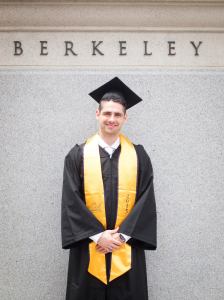
Our Life After College Series continues with Dublin High School Class of 2011 alum Aslan Brown who recently earned a degree in molecular and environmental biology at the University of California, Berkeley. Aslan’s story, like others in this series, highlights the importance of reaching out early to ask for help when faced with the inevitable challenges of a college-level curriculum. Aslan has previously been profiled as part of OneDublin’s Life in College Series and as a Dublin High School student when he was named the City of Dublin’s Young Citizen of the Year in 2010.
OneDublin.org: Let’s start with your graduation, what degree did you earn and was that your plan when you entered UC Berkeley?
Aslan Brown: “I earned my degree in molecular and environmental biology (MEB), with a minor in conservation and resource studies. I started at UC Berkeley with that major declared. MEB is part of the College of Natural Resources, which is a small college with only nine or ten majors and 100-150 students per major. Being part of a small college meant I was able to combine a large university experience with the advantages of a small school, such as being close to your advisor.
“MEB is a survey of the environment from a macroscopic scale, looking at climate change, humans and ecosystems, and the environment working together and from a molecular level, looking at what happens under the surface.”
OneDublin.org: What did it feel like to hear your name and walk up on stage to get your UC Berkeley diploma?
Brown: “It was surreal. Even when I was sitting in the audience, hearing the names of my friends called and waiting for my turn, it still felt like I wasn’t a participant, I was just observing. But as soon as my group was called up, we approached the stage and started up the stairs I thought ‘this is actually happening’. My parents, family and friends were in the audience supporting me and even though you can’t see any of them, it’s bright lights in your face, just knowing that they are there brought warmth and joy to my heart. When my name was finally called it was silent for a moment and then as I took the first few steps there was an eruption of noise, cheers of ‘Aslan!’. It was the most amazing experience I’ve ever had.”
OneDublin.org: Is your likely next step pursuing graduate studies or entering industry?
Brown: “I’m definitely planning to pursue graduate education and am currently deciding between a masters / PhD route or another route. I may go into environmental law, and as a result go to law school. I’m going to take a year off to get some work experience and am interviewing for research positions. I’m also going to volunteer on a research project with one of my Berkeley professors.”
 (DUSD Press Release) The Dublin Unified School District Board of Trustees unanimously approved plans to deal with the district’s expanding student population at Tuesday night’s regular meeting, affirming the recommendations made by the District Optimization Committee (DOC).
The District’s strategy includes short-term planning for the 2015-16 and 2016-17 school years as well as a three-year plan that spans the 2017-18 through 2019-20 school years. There are no boundary changes or lottery in either plan. The plan also includes the completion of a Board-approved District-Wide Facilities Master Plan to meet the district’s future facilities needs and an annual review of the actions taken.
The plan highlights for 2015-16 and 2016-17 include:
- A cap at Fallon Middle School of 1,500 students
- Program adjustments in the form of three lunch periods at Fallon Middle School
- The potential use of a TK-6 program at one or more elementary schools
- Consideration of the potential for a theme-based school at Wells Middle School
Plan highlights for the 2017-18 through 2019-20 include:
- Continued cap and program adjustments at Fallon
- Accelerated construction of E-5 (Jordan Ranch School) – targeted opening Fall 2018
- E-5 (Jordan Ranch School) built as a theme-based K-8 School
- Use of K-6 programs as needed
- The regionalization of the TK (developmental kindergarten) program to provide space at elementary sites
- Implementation of a theme-based program at Wells

(photo credit Austin Ginn)
Dublin High School Class of 2011 alum and United States Military Academy at West Point Class of 2015 graduate Ben Young has been the subject of several OneDublin.org profiles, from the article he wrote in 2010 after being accepted into West Point, to his follow-up in 2011 written during his first semester, to Michael Utsumi’s coverage of Ben Young’s visit to Dublin High in 2013 to inspire fellow students. For the next article in our Life After College Series I met with Ben once again, who is back in Dublin for a few weeks after graduating from West Point and preparing to continue his military adventure in Fort Rucker, Alabama.
James Morehead: Let’s start with where you are now – what degree did you earn and what comes next?
Ben Young: “I am commissioned as a second lieutenant in the army and earned a B.Sc. in electrical engineering. On July 21 I report to the U.S. Aviation Center of Excellence and Fort Rucker in Alabama for two years of flight school to become a helicopter pilot and in the end will owe the army eight years of active duty. It’s usually a five year commitment but because of aviation school I’ll owe additional time. After flight school I’ll be deployed to a unit.
“Second lieutenant is the first commissioned officer rank – the bottom of the totem pole! The hierarchy is second lieutenant, first lieutenant, captain, major, lieutenant colonel, and then general officers. After graduation we take a commission and oath to serve and defend The Constitution.”
Dublin High School Class of 2015 Commencement: “Change”
 Timing is everything. Somehow Dublin High School’s Class of 2015 commencement ceremony avoided the one day of rain in weeks by just a few hours. As was the case last year, Dublin High seniors were able to graduate at home, in Gaels Stadium. The growth in enrollment at DHS brings increased energy and excitement for each graduating class, with stands packed with grandparents, parents, siblings and friends. Each name read brings a burst of cheers from across the stadium building to the moment every student waits for – the turning of the tassels and flinging of mortar boards into a cloudless sky.
The event included speeches and presentations by Dublin High School Gael Scholar Zachary Schmidt, City of Dublin Mayor David Haubert, Principal Carol Shimizu, School Board President Amy Miller, Dublin High School teacher Tim Sbranti, Senior Class President Sobhon Khairy, Senior Class Vice President Sereena Patel and Senior Class Secretary Karina Gurusiddaiah. The Dublin High Color Guard and Band, the Dublin High Choir, bagpiper Jeff Campbell and members of the Air Force Color Guard added fanfare to the ceremony.
OneDublin.org had the honor and privilege to attend the event, capturing highlights on video including a time-lapse movie of the diploma presentations (compressing over one hour down to under 3 minutes):
This year’s theme was “Change” – and the Class of 2015 has a lot to celebrate. Over 97% of Dublin High’s Class of 2015 will be attending college this Fall, including Harvard, Stanford, Cornell, every University of California (UC), every CSU campus and and many more.
For those who couldn’t attend (and for those that want to relive some of the highlights) here is more from the memorable event:
Dublin High School’s Tim Sbranti Joins Congressman Swalwell’s Team, Leaving Legacy as Educator and Mayor

Tim Sbranti
There is a fable shared by current Dublin High School Principal Carol Shimizu that a young Tim Sbranti travelled through town in a cleanly pressed shirt and willingly introduced himself, with a firm handshake as the future Mayor of the City of Dublin. Perhaps this is a story of legend. All we do know is that this 1993 graduate of DHS made these dreams come true.
As we conclude the Difference Maker series for 2015, we wanted to place a spotlight on a long time community member that has contributed so much to his alma mater, the City and to the larger region. The prospect of witnessing a native young person advance to the position of Mayor strictly comes out of something that resembles “Mayberry RFD.” Yet, in Dublin, all things are possible.
As a young person, Tim played Varsity Tennis and Basketball while enrolled at DHS. Additionally, he was the editor of the Dublin Shield and served as Student Body President. Subsequently, he attained a B.A in Government and minors in History/Communications while attending CSU Sacramento. Ultimately, he achieved a Single Subject Teaching Certificate in 1998.
His attachment to the Dublin Unified School District continued shortly thereafter – gaining employment as a Social Studies teacher in the fall of 1998. In the years that followed, he taught subjects ranging from Civics, Economics, U.S. History and World History. Further, he has sustained as a Leadership teacher, advised for the school newspaper, Speech and Debate. As a passionate sportsperson, Mr. Sbranti has also led his expertise in coaching athletes in the areas of Tennis, Basketball and Volleyball.
Professor Sheryl Staub-French Demystifies Engineering for University of British Columbia Students

Dr. Sheryl Staub-French
The latest profile in our popular Women in STEM (Science, Technology, Engineering and Math) series puts the spotlight on Dublin High School Class of ’88 alum Dr. Sheryl Staub-French who went on to earn an civil engineering degree from Santa Clara University and PhD in civil engineering at Stanford University, ultimately security a position at the University of British Columbia. In sharing her story, Sheryl points to misperceptions about what an engineer is and does as a key barrier to more women entering the field. Sheryl was named UBC’s Goldcorp Professor for Women in Engineering, tasked with leading “a targeted recruitment strategy for UBC Engineering that plans to increase the number of women enrolled in its programs from the national average of 20 per cent to close to 50 per cent by 2019.”
Other profiles in OneDublin.org’s Women in STEM series include Disney Imagineer Molly Rinke, Black Girls Code founder Kimberly Bryant, NASA scientist Amy Mainzer, Harvey Mudd College president Maria Klawe, Google vice president Johanna Wright and many more.
OneDublin.org: How do you describe engineering?
Dr. Sheryl Staub-French: “There are a lot of misperceptions about engineering. Engineering is a creative, collaborative, rewarding profession that helps people in communities. Engineering is focused on making people’s lives better through the application of math and science.”
OneDublin.org: There are many different disciplines of engineering. Do high school students need to have a discipline in mind before entering college?
Dr. Staub-French: “While it varies, you generally have the first year to figure it out. At the University of British Columbia, for example, we have a common first year and at the end of that year you select your discipline. We do a lot of case studies across the different disciplines in the first year so that students can make an informed choice. Students can switch, although it doesn’t happen very often and does end up taking longer.”
OneDublin.org: At what point did you first become interested in engineering?


 OneDublin.org